




Are There Mosquitoes in Las Vegas, NV?
Finding a mosquito buzzing near your patio can feel out of place in the desert, which leaves many residents asking, are there mosquitoes in Las Vegas, NV? Yes, mosquitoes live throughout the valley, and they can become noticeable when warm weather, irrigation, pools, drains, and landscaping give them enough water and shade.
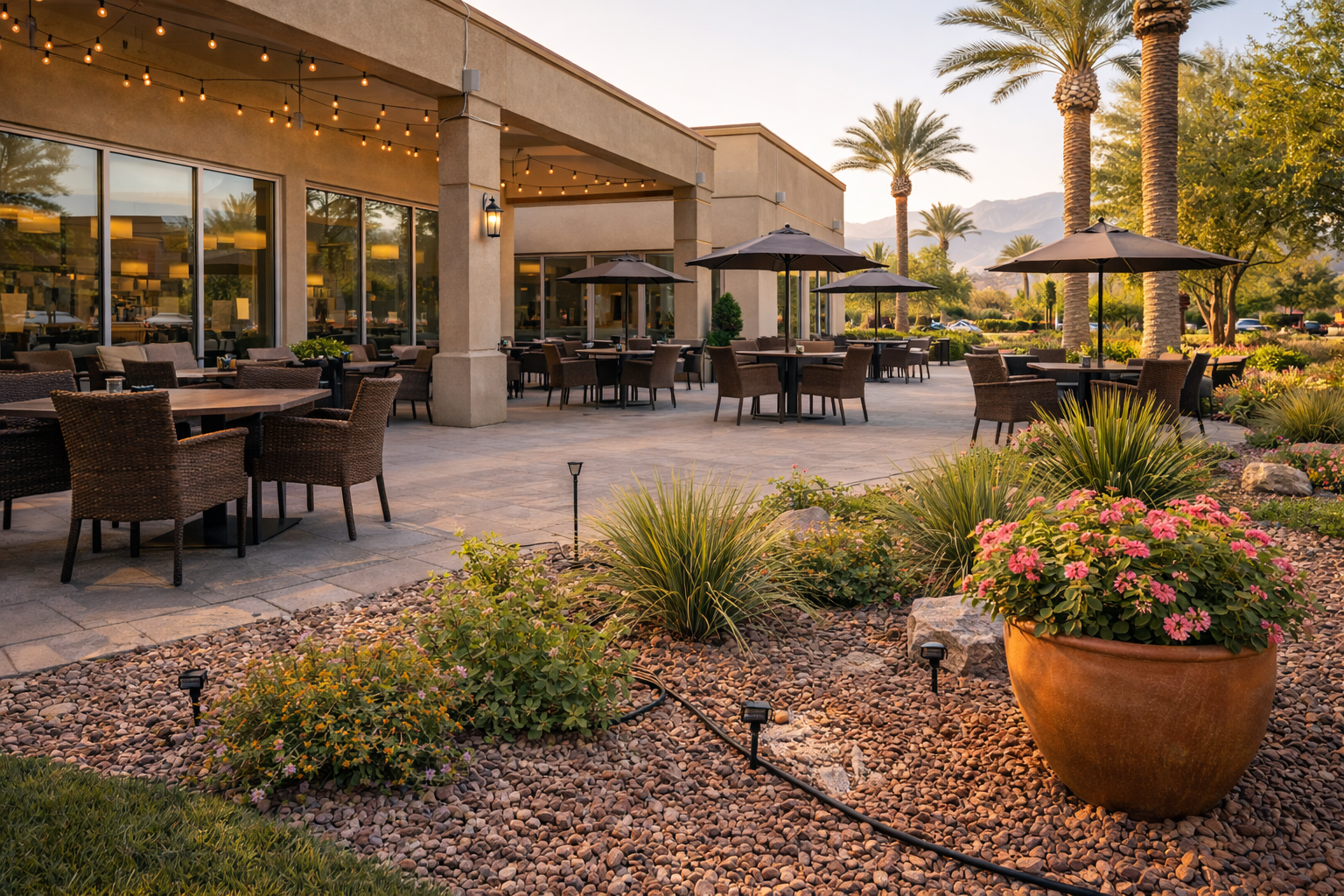
The city may be dry, but it’s not completely free of moisture. Neighborhoods contain lawns, golf courses, water features, storm drains, irrigated plants, and thousands of swimming pools. Together, these features create small habitats where mosquitoes can survive close to homes and businesses.
Why Can Mosquitoes Live in Las Vegas, NV?
Mosquitoes can live in Southern Nevada because they do not need a lake, river, or long rainy season to reproduce. Many species use small amounts of standing water, while adult mosquitoes rest in shaded, protected areas during the hottest parts of the day.
Around the valley, enough water may collect in:
- Irrigation valve boxes
- Clogged or slow-moving drains
- Plant containers and saucers
- Pool covers and neglected pools
- Low areas beneath desert landscaping
- Water features that are not circulating
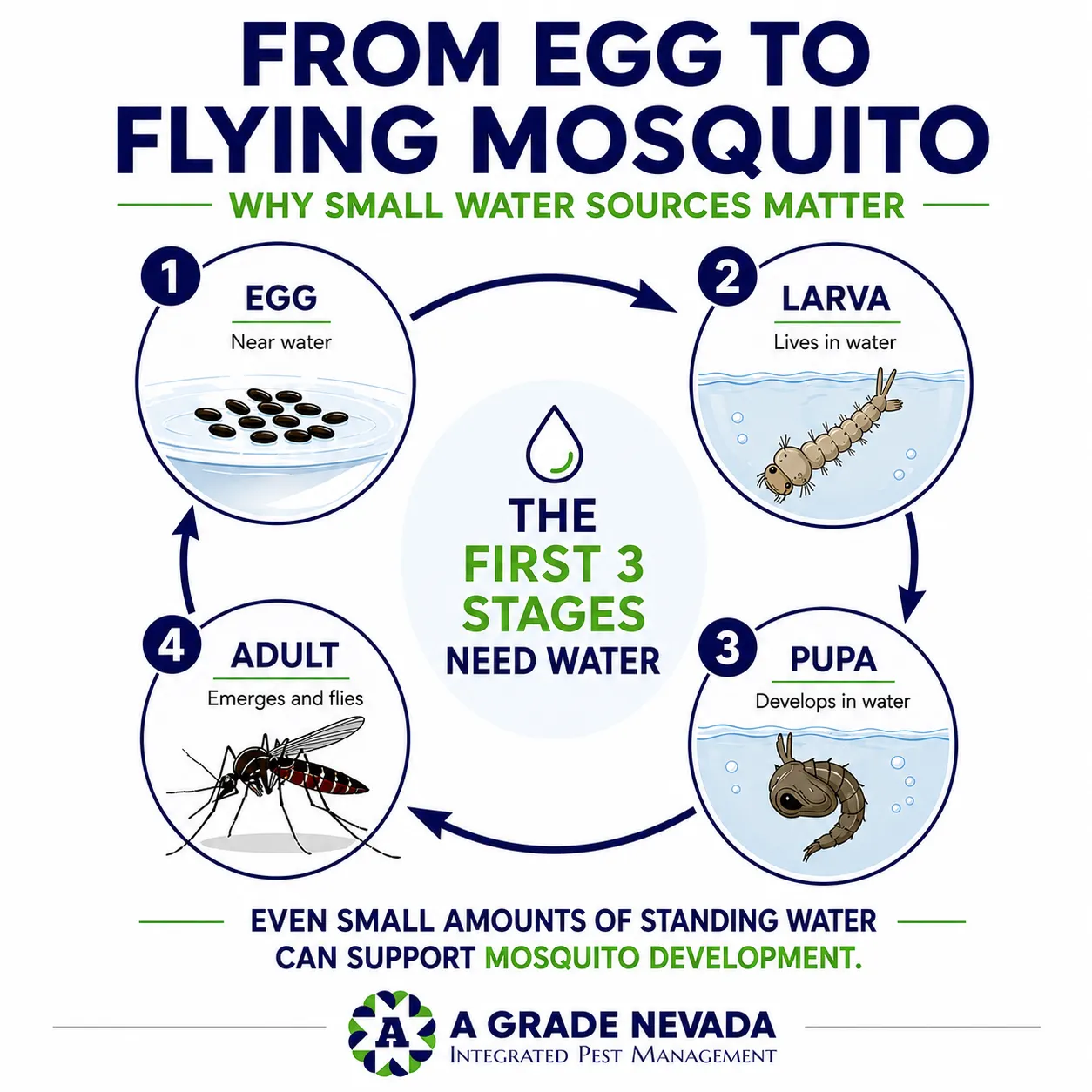
Some mosquitoes lay eggs directly on water, while Aedes mosquitoes place their eggs on the inside walls of water-holding containers. The CDC explains how Aedes mosquitoes develop from eggs to larvae and pupae in water, which is why even a small container can become a breeding site.
These conditions can differ from one property to the next, even within the same neighborhood.
When Is Mosquito Season in Las Vegas?
Mosquito activity in Southern Nevada is usually most noticeable from spring through fall, although the exact timing can shift with weather, rainfall, irrigation, and available standing water. The Southern Nevada Health District lists April through October as the primary mosquito breeding months in the region.
You may notice more mosquitoes:
- After monsoon rain leaves temporary puddles
- Near overwatered landscaping
- Around shaded patios in the morning or evening
- Close to green pools or unmanaged water features
- Following an irrigation leak or drainage problem
The time of day also depends on the type of mosquito. The Health District explains that Aedes mosquitoes often bite during the day, while mosquitoes linked with West Nile virus are often more active around dawn and dusk.
Are Mosquitoes Only a Nuisance?
Mosquitoes can leave itchy bites and make outdoor spaces less comfortable. Some species can also carry viruses, which is why health officials monitor local populations and encourage residents to reduce bites.
In June 2026, the Southern Nevada Health District reported the season’s first West Nile virus-positive mosquito pools in Clark County. The agency also reported 26 human West Nile virus cases in 2024 and no reported human cases in 2025.
Finding a mosquito near your home does not mean you have been exposed to an illness. For everyday protection, the CDC recommends using an EPA-registered repellent, wearing loose-fitting long sleeves and pants, and emptying standing water around the home.
There is no need to panic over one mosquito, but repeated bites or a sudden rise in activity are good reasons to look more closely at the property.
What Does Mosquito Prevention Look Like?
Mosquito prevention works best when you focus on the small water and shelter conditions found around desert properties. You do not have to remove every plant or stop enjoying your pool. The goal is to reduce avoidable water sources and keep managed water moving.
| Area to Check | What to Do |
| Irrigation system | Watch it run and look for leaks, runoff, or pooling water |
| Small containers | Empty water from toys, buckets, saucers, and furniture covers |
| Swimming pool | Keep the water treated, circulating, and maintained |
| Exterior drains | Clear leaves and debris so water can move freely |
| Shaded landscaping | Check for damp soil, hidden containers, or slow drainage |
| Doors and windows | Use screens and an EPA-registered repellent to reduce bites |
The Southern Nevada Water Authority advises residents to check irrigation systems for leaks and pooling. Local water-waste rules also require irrigation or supply-line malfunctions to be repaired within 48 hours, so fixing a leak can support both mosquito prevention and water conservation.
When Does Persistent Activity Call for Mosquito Control?
Mosquito control may be worth considering when bites continue after you address the obvious water sources. Persistent activity can come from a hidden drain, difficult-to-reach water, shaded resting areas, or conditions on a nearby property that you cannot correct on your own.
An inspection may help when:
- You are getting bitten during most outdoor visits
- Mosquitoes remain active after standing water is removed
- You cannot find where the activity is coming from
- A pool, drain, or irrigation area seems to be involved
- Mosquitoes are affecting customers, tenants, or outdoor work
Effective mosquito control should begin with the property conditions, not a preset treatment. Finding likely breeding and resting areas helps determine whether habitat changes, monitoring, targeted treatment, or a combination of steps makes sense.
Get Local Help for Mosquitoes in Las Vegas, NV
So, are there mosquitoes in the area? Yes, mosquitoes live in the valley, but their presence does not mean every yard has the same problem. Water use, shade, drainage, nearby properties, and seasonal weather can create very different conditions from one block to the next.
A Grade Nevada uses inspection-driven Integrated Pest Management to look for the reasons mosquito activity continues before recommending a plan. When bites remain persistent, contact our local team to discuss mosquito control and arrange an inspection based on your property.
Frequently Asked Questions
The number of mosquitoes you notice can change with temperature, rainfall, irrigation, and available water. Warmer months often bring more bites, but protected water sources can allow mosquitoes to appear outside the season people usually expect.
The city is dry overall, but many properties still have pools, irrigation systems, drains, shaded landscaping, and water features. Mosquitoes only need a small amount of still water to breed, so local property conditions can matter more than the desert climate.
Some neighborhoods create more favorable conditions than others. Heavier irrigation, mature landscaping, pools, water features, drainage problems, and nearby green pools can all give mosquitoes more places to breed and rest. Our mosquito control looks at the conditions around each property rather than assuming activity is the same across the valley.
Activity depends on the mosquito species. Some mosquitoes are more noticeable around dawn and dusk, while others may bite during the day, especially in shaded patios, landscaped areas, and other spots where people spend time outside.
Mosquito activity may increase when a property has several sources of water, shade, or nearby breeding areas.
Common factors include:
- Irrigation leaks or overwatering
- Green pools or neglected water features
- Mature, shaded landscaping
- Slow drains or low areas that hold water
- Standing water on nearby properties
When the source is hard to find, or bites continue, call our team so we can talk through what you are noticing and whether an inspection makes sense.