



Know Your Pests: Scorpion

Catching a glimpse of a scorpion moving across the garage floor can immediately raise questions about what you’re looking at. You may wonder if scorpions are actually insects, which types you might encounter, or whether finding one means there could be more nearby. Understanding how scorpions behave, where they hide, and what brings them around a property can make a sighting easier to assess.
Scorpions are a normal part of the Southern Nevada desert, but they’re arachnids, which means they’re more closely related to spiders than insects. At A Grade Nevada, we believe understanding how scorpions hunt, hide, and move around a property is an important part of figuring out why you’re seeing them and what conditions may be supporting their activity.
What Is a Scorpion?
A scorpion is an arachnid with eight legs, a pair of pincers, and a segmented tail that curves over its body and ends in a stinger. Scorpions are nocturnal predators, so they usually spend the day in protected hiding places and become more active after sunset.
Is a Scorpion a Bug?
Not technically. Scorpions are arachnids, which puts them in the same broader group as spiders rather than insects. One easy distinction is the number of legs: adult insects have six legs, while scorpions have eight.
Whatever you call them when you find one in the garage, correct identification matters. Different scorpions have different behaviors and levels of concern, and some scorpion-like creatures aren’t actually scorpions.
What Are the Types of Scorpions You May Encounter?
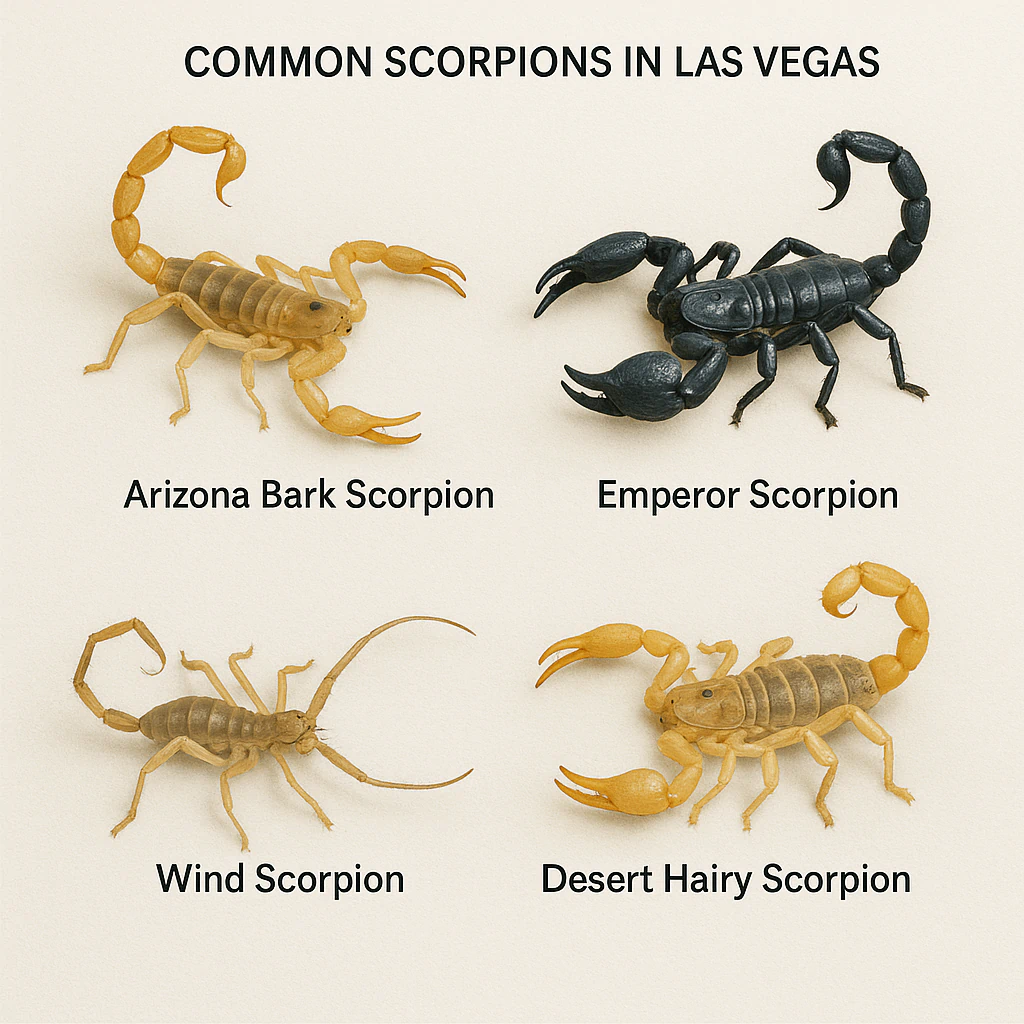
Several scorpion and scorpion-like species may turn up around Southern Nevada properties, but they do not all pose the same level of concern. Arizona bark scorpions, desert hairy scorpions, occasional escaped exotic species, and wind scorpions differ in size, behavior, venom, and where you are most likely to encounter them.
Arizona Bark Scorpion
Arizona bark scorpions are slender, light tan, and about 2 to 3 inches long. They are active at night, can climb walls and ceilings, and may hide in places such as shoes, sinks, and laundry.
The Arizona bark scorpion is the only scorpion in the United States considered a significant medical concern. Its sting can cause intense pain and numbness, with more serious reactions possible. Poison Control explains symptoms and what to do after a scorpion sting.
Desert Hairy Scorpion
The desert hairy scorpion is the largest scorpion in North America and can reach about 6 inches long. Look for a yellow-tan body, darker top, and hairy legs.
These scorpions prefer outdoor areas such as burrows, desert landscaping, and spaces beneath rocks. Their sting can be painful, but it is not considered dangerous to most people. Extreme heat or drought can sometimes bring them indoors.
Emperor Scorpion
Emperor scorpions can reach about 8 inches and have glossy black bodies with thick pincers. They are not native to Nevada and are rare in the wild here. A sighting may be connected to an escaped or released exotic pet.
Wind Scorpion
A wind scorpion, also called a solifuge or sun spider, is not a true scorpion. It has no stinger and is not venomous, although it can bite. Its tan-to-reddish coloring, large jaws, long legs, and quick movement often lead people to mistake it for a scorpion. You may encounter one in garages, crawlspaces, or outdoor storage areas.
Where Do Scorpions Hide Around a Property?
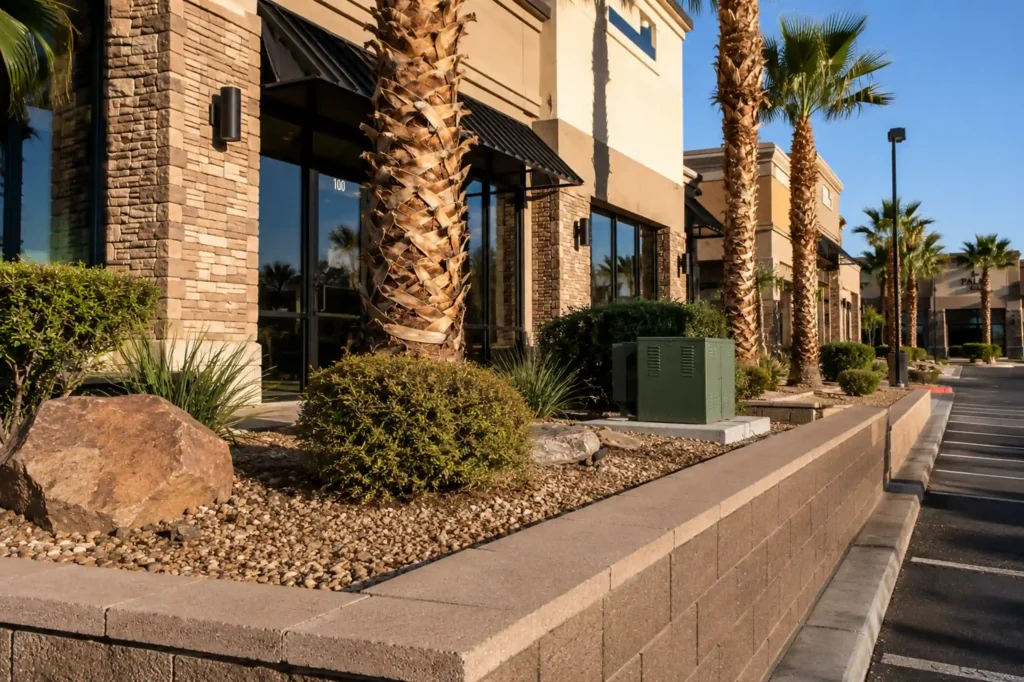
Scorpions spend much of the day in dark, protected spaces before coming out at night to hunt. Around Las Vegas properties, desert landscaping and developed environments can provide plenty of shelter.
Some common hiding areas include:
- Beneath rocks, bark, planters, and yard debris
- Cracks and sheltered gaps in block walls
- Behind stored items in garages
- Shaded areas around pools and irrigation
- Closets, bathrooms, baseboards, and wall gaps
- Door thresholds and utility openings
Crickets, cockroaches, and other small pests can also support scorpion activity. Outdoor lighting may attract these prey insects, while irrigation and stored materials can provide additional shelter.
What Can a Scorpion Sighting Tell You?
Seeing a scorpion tells you more than just what pest is present. Where you found it and what is happening around that area can provide clues about why the scorpion is there. When we investigate scorpion activity, we look at the surrounding conditions instead of treating every sighting as the same problem.
| Where You Find It | What to Check Nearby |
| Near a door | Door sweeps, thresholds, and exterior gaps |
| In the garage | Stored items, garage-door seals, and wall gaps |
| Around landscaping | Rocks, planters, block walls, and insect activity |
| Near pools or irrigation | Moist areas, shelter, and nearby prey insects |
Scorpion Hunting: UV, Not Guesswork
Scorpions are nocturnal and can be difficult to locate during the day. Under ultraviolet light, they glow a green-blue color, helping us spot activity during nighttime inspections.
We use those observations to look beyond the scorpion itself. Wall gaps, planters, fence lines, entry points, and nearby pest activity can help us understand where scorpions may be traveling and why they are there.
That distinction matters. Finding a scorpion tells you what is present. Inspecting the surrounding conditions helps explain why.
How Can You Make Your Property Less Inviting to Scorpions?
Scorpion prevention works best when you address shelter, food sources, and access together. A few practical changes can reduce the conditions that support activity:
- Move stored materials away from exterior walls
- Check worn or open door sweeps
- Seal appropriate gaps around doors and utility lines
- Reduce clutter in garages and storage spaces
- Trim dense vegetation away from the structure
- Watch for crickets, cockroaches, and other insect activity near exterior lights
Seeing one scorpion doesn’t necessarily mean there are more inside. But if you keep seeing them or find young scorpions, it may point to activity nearby.
Understand What Your Scorpion Sighting Is Telling You
Scorpions belong in the desert ecosystem, but they do not belong inside your home or business. If you find one, you do not have to assume the worst. Pay attention to where and when you saw it, nearby insect activity, and any gaps or sheltered areas that could be contributing to the problem.
At A Grade Nevada, we use an inspection-driven Integrated Pest Management approach to look at the conditions behind pest activity instead of treating every property the same way. When sightings continue, our scorpion control focuses on identifying activity, possible entry points, prey insects, and environmental conditions before recommendations are made.
Frequently Asked Questions About Scorpions
-
Scorpions may enter while looking for prey, shelter, or more favorable conditions. Gaps beneath doors, around utility lines, and in exterior walls can provide access, while nearby insect activity may give them a reason to stay.
-
Not necessarily. A single scorpion may have wandered inside or followed prey. Pay closer attention if sightings repeat, you find young scorpions, or activity keeps occurring in the same room or area. Where you saw the scorpion, when you saw it, nearby insect activity, and visible entry gaps can all provide useful clues.
-
Keep children and pets away and avoid handling the scorpion. Then, when it is safe to do so, look around the immediate area for clues such as:
- Gaps beneath doors or along baseboards
- Boxes, clothing, or stored materials
- Openings around plumbing or utilities
- Cricket or cockroach activity
- Evidence of additional scorpions
Those observations can help us focus an inspection on the areas most likely to matter.
-
Some can. Arizona bark scorpions are capable climbers and may move across walls and ceilings. That is why checking only ground-level gaps may not tell the whole story. Wall joints, textured surfaces, utility openings, and other access points above ground level may also deserve attention.
-
Consider a closer inspection when scorpions repeatedly appear indoors, sightings occur in bedrooms or living spaces, you find young scorpions, or nighttime UV checks reveal several scorpions outdoors. Other pest activity can matter too because scorpions hunt insects. If you are unsure what repeated sightings mean, call us to discuss what you are seeing and whether an inspection makes sense for your property.