



Inspector’s Hub: From My Clipboard to Yours
Hey there—I’m Inspector A Grade!
I’m not just a mascot—I’m your personal pest investigator, here to help you protect your space and keep everything running at an A+ level. My name? It’s inspired by the “A Grade” businesses that work hard to earn from the health department, and I’m here to make sure pests never get in the way of that.
Whether you’re running a busy commercial kitchen, managing a facility, or caring for your home, I represent more than just a character—I represent a pest management company that’s committed to smart, sustainable, and scalable solutions. We specialize in environmentally responsible pest strategies that don’t just treat problems—they prevent them.
At A Grade Nevada, our eco-conscious approach is backed by EPA guidelines and powered by Integrated Pest Management (IPM)—because good pest control shouldn’t come at the cost of your health, your pets, or the planet.
This Hub is where I share what I’ve learned out in the field: how to ID bugs, what attracts them, and most importantly—how to keep them out for good. No scare tactics. No unnecessary chemicals. Just solid, science-based tips you can actually use. So go ahead—click around! I’ve got guides, checklists, and plenty of down-to-earth advice to help you stay ahead of the pests—and Make the Grade, just like I do.
IPM 101: Smarter Pest Control, Straight From the Source
Hey again—Inspector A Grade here!
Let’s dive into what Integrated Pest Management (IPM) really means—and why it’s the smart, sustainable choice for pest control in Las Vegas. You’ve probably heard a lot of buzzwords like green, natural, or safe for pets. That’s great, but IPM goes deeper. It’s not just about using eco-friendly products—it’s about using your brain before your sprayer
Here’s the full breakdown so you know exactly what you’re getting when you choose eco-conscious pest control that works.
What is Integrated Pest Management (IPM)?
IPM is a science-based approach that combines smart observation, thoughtful planning, and targeted treatments to control pests—without relying on routine spraying. It’s widely used in hospitals, schools, restaurants, and even agriculture, because it prioritizes safety and sustainability.
At A Grade Nevada, we use IPM to address the root causes of pest problems—not just the symptoms. That means every treatment plan is customized to your space, your pest pressures, and your goals.
Benefits of Eco-Friendly Pest Control vs. Routine Spraying
Let’s be real—routine spraying might feel like it’s doing something, but it often just masks the problem. IPM focuses on prevention, not pesticides.
With an IPM plan:
- You use fewer chemicals (good for kids, pets, and air quality)
- Pests are less likely to return
- You get long-term control—not short-term relief
- You avoid resistance buildup (yes, pests can adapt!)
It’s better for your home or business, and better for the Las Vegas desert ecosystem.
The 5 Core Principles of IPM
Monitoring: This means regular inspections—noticing signs like droppings, damage, or unusual activity. I use my inspector eyes (and sometimes a flashlight) to stay ahead of problems before they spread.
Identification: Not all pests are created equal. We ID the exact species, because treating a ghost ant the same way you’d treat a carpenter ant just won’t cut it. The right ID leads to the right plan.
Prevention: Here’s where the real work begins. As your eyes in the field, I represent a professional pest management company focused on keeping commercial properties pest-free and inspection-ready.
During walkthroughs, I flag the conditions that attract unwanted guests—things like unsealed cracks, missing door sweeps, overgrown vegetation, or poor food and trash storage practices. These may seem small, but for pests, they’re an open invitation.
I help business owners and facility managers understand why these risk factors matter and how they can be corrected. The goal? Cut off the invitation before pests RSVP—and protect your operations before issues become violations.
Control: If we do need to treat, we choose the least toxic method that works. That could be a bait station, a botanical dust, a pheromone trap—you name it. Spraying is the last resort, not the first step.
Evaluation: Pest control isn’t “set it and forget it.” I check back, follow up, and adjust the plan if needed. Real IPM is a cycle that evolves with the seasons, your space, and your needs.
Why IPM Reduces Chemical Use and Improves Long-Term Results
IPM focuses on strategy, not saturation. By controlling the conditions that attract pests (like moisture, food, and entry points), we break the cycle instead of just reacting to it. That means fewer repeat visits, fewer pest rebounds, and a more peaceful environment all around.
How IPM Protects Kids, Pets, Pollinators, and Ecosystems
Southern Nevada has a unique ecosystem—and we want to protect it. IPM reduces risk to:
- Children and pets, who spend time close to the ground
- Pollinators, like bees and butterflies, who are essential for our environment
- Birds and wildlife, especially in desert-adjacent neighborhoods or larger residential properties
We follow EPA guidelines, use targeted treatments, and always consider the impact beyond just getting rid of bugs.
Inspector A Grade’s Tip:
“IPM isn’t just pest control—it’s problem-solving. We don’t guess. We assess, plan, and protect what matters most. That’s how we Make the Grade.”
Know Your Pests: ID & Insights
Hey there—Inspector A Grade here, reporting for duty to help you outsmart what’s bugging your business (or your home).
This section is brought to you by a professional pest management company that knows identification is everything. Whether you’re running a commercial facility, food service operation, or office space, accurate pest ID is the first step toward effective treatment. You can’t solve a pest problem if you don’t know what you’re up against—and that’s where I come in.
We’ll walk you through the who, what, and why behind the pests showing up around your property so our team—and yours—can act fast, smart, and strategically.
From ants and roaches to rodents and scorpions, I break down the most common pests in Las Vegas and Henderson:
- What they look like
- Why they’re a problem
- Where they hide
- And how our science-first, eco-conscious approach keeps them out—safely
Because real pest control doesn’t start with chemicals—it starts with understanding your enemy and building a strategic plan tailored to your environment.
As a trusted pest management company, we focus on insight-driven, compliance-ready solutions that help businesses stay clean, protected, and always ready to Make the Grade.
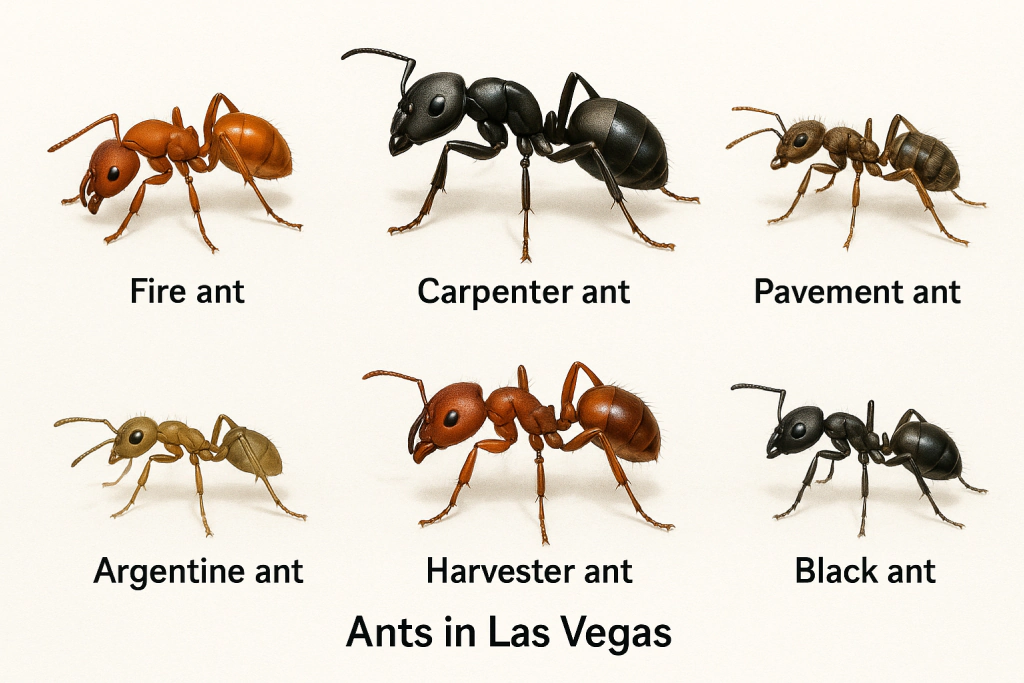
Ants: Small Bodies, Big Problems
These tiny invaders are more than just a nuisance—they form expansive networks, damage structures, contaminate surfaces, and bring the entire colony along for the ride.
I’m an Inspector A Grade with a professional pest management company serving Las Vegas and Henderson. I’ve encountered ant infestations in restaurants, warehouses, commercial kitchens, and high-traffic facilities—places where even a small pest problem can lead to major consequences.
Some species are a minor annoyance, while others pose health risks or cause costly damage. Either way, identification is key. Knowing exactly what kind of ant you’re dealing with is the first step to stopping the infestation—and protecting your business from further risk.
Here’s a breakdown of the most common ant species in Southern Nevada, what to watch for, and why it matters for your facility.
Argentine Ants
What They Look Like: Small (1/8”), dark brown to black, and super fast. You’ll usually see them traveling in long trails.
Why You Should Care:
- These ants don’t sting, but they’re highly invasive.
- They push out native ant species and can build supercolonies that spread fast.
- Indoors, they’re drawn to sweets and moisture—especially in kitchens and bathrooms.
Carpenter Ants
What They Look Like: Big (¼”–½”), usually black or red and black. You might find them near wood trim, baseboards, or wall voids.
Why You Should Care:
- They don’t eat wood, but they excavate it to build nests, which weakens structures over time.
- Left unchecked, they can cause serious structural damage.
- Unlike termites, they leave sawdust-like debris as a clue.
Fire Ants
What They Look Like: Reddish-brown with a darker abdomen, small (about 1/8”), and aggressive if disturbed.
Why You Should Care:
- Their sting is painful and venomous, often causing welts or allergic reactions.
- They’re a threat to pets, children, and anyone barefoot outdoors.
- Nests pop up quickly in lawns, gardens, and near irrigation systems.
Harvester Ants
What They Look Like: Reddish-orange to dark brown, ¼”–½”, with large heads and visible mandibles. Often seen near bare, sandy patches with crater-style nests.
Why You Should Care:
- Their sting is strong, and they’re protective of their territory.
- They clear vegetation around their nests, ruining landscaping.
- Mostly outdoor pests, but they’re a concern for hikers, pets, and play areas.
Pavement Ants
What They Look Like: Tiny (1/8”), dark brown to black with fine grooves on their heads and thorax. Found along sidewalks, cracks in driveways, and indoors near baseboards.
Why You Should Care:
- While not dangerous, they build colonies under concrete slabs, which can cause long-term wear.
- They sneak inside to forage for crumbs and sweets—especially in commercial kitchens or breakrooms.
- Known to battle other ants—and sometimes each other—leaving messy trails behind.
Inspector A Grade’s Tip:
“Not all ants are the same—and neither are the treatments. That’s why we inspect first, identify correctly, and build a plan that’s right for your space.”
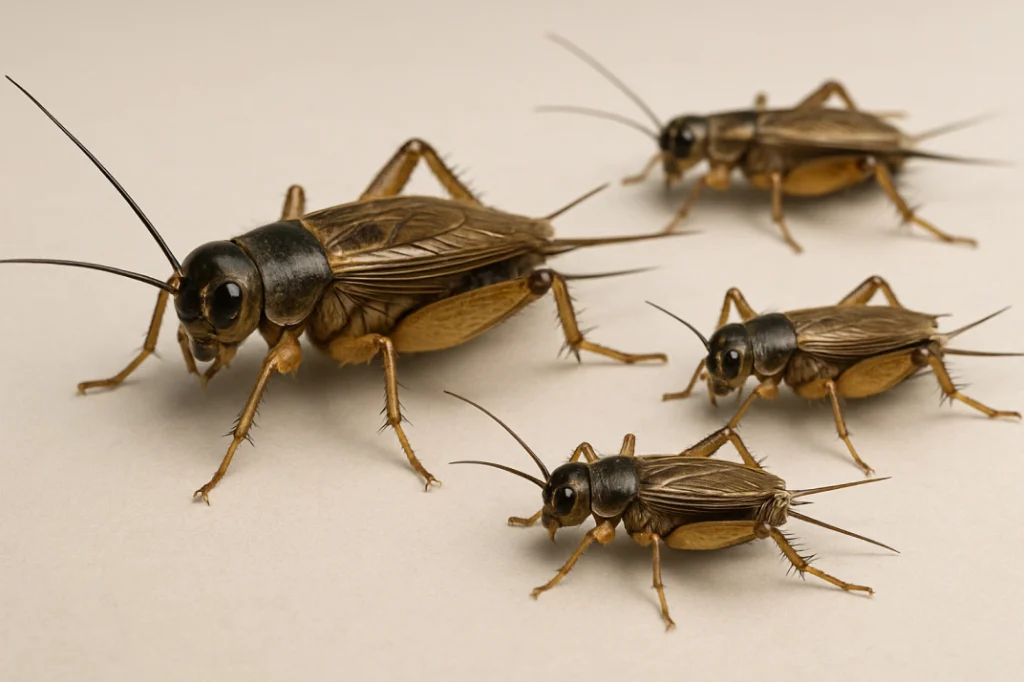
Chirp Today, Infestation Tomorrow
That nighttime noise is more than just annoying—it’s a red flag that pests may be settling into your property. For any business or facility, these disruptions can signal a deeper issue requiring prompt attention from a trusted pest management company.
Crickets might seem harmless or even superstitiously “lucky,” but when they start multiplying around your building or sneaking indoors, they become a serious commercial concern. Beyond the constant chirping, crickets can damage packaging, attract predators, and compromise your facility’s clean, professional appearance.
Here’s what your business needs to know to keep them from turning your walls, storage areas, or patio into their personal concert venue.
What They Look Like
- Small to medium-sized with long legs and antennae—usually brown, tan, or greenish
- Most active at night and often heard before they’re seen
- Common around garage doors, baseboards, and outdoor lights
Why Crickets Are a Problem
- Multiply fast—a few can turn into a wall void full of insects
- Chew on fabrics, paper, cardboard, and even insulation
- Their constant chirping is a sign of active breeding nearby
- Attract larger pests like scorpions, spiders, and rodents looking for a snack
Where You’ll Find Them
- Under patio furniture, near planters, or tucked inside wall and door cracks
- Behind baseboards, around trash bins, or in cluttered garages
- Especially common near exterior lighting where insects gather
Inspector A Grade’s Tip:
“If you’re hearing crickets, they’ve already moved in. The chirping isn’t random—it’s a mating call. And that means more crickets, more droppings, more damage, and more predators right behind them. Time to quiet the chorus and Make the Grade.”
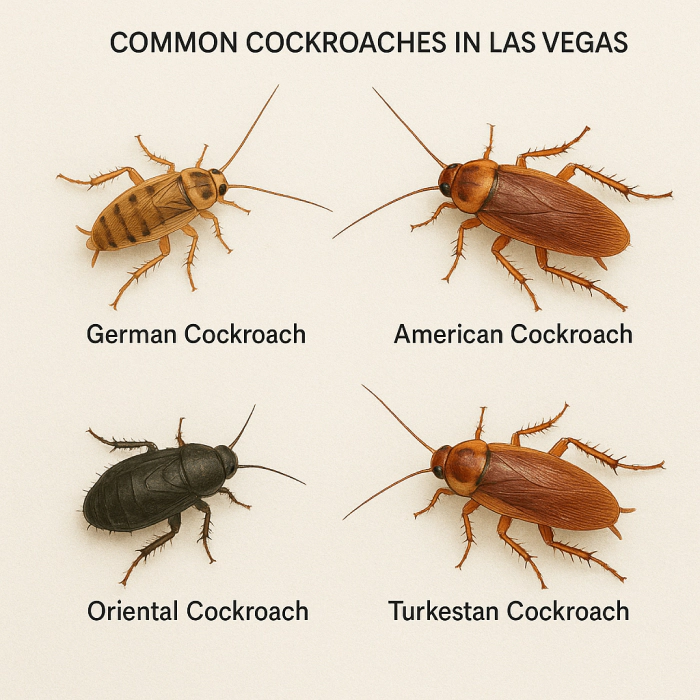
Roaches Don’t Knock—They Invade
They’re fast, filthy, and incredibly hard to evict. Spot one in your facility? There are likely more hiding where customers and staff can’t see. Cockroaches are more than a nuisance—they can spread bacteria, trigger allergies, and seriously damage your reputation, especially in food service or hospitality environments.
As a trusted pest management company serving Las Vegas and Henderson, we know that effective cockroach control starts with correct identification. Treatment strategies vary by species and hiding spots, so here’s your go-to guide for identifying the most common commercial cockroach threats in Southern Nevada.
American Cockroach
What They Look Like: The biggest of the bunch—up to 2 inches long. Reddish-brown with a yellow “halo” behind the head.
Why You Should Care:
- Common in commercial kitchens, sewer lines, and basements.
- They can fly short distances (yep, surprise!).
- Known carriers of bacteria, including Salmonella.
- Fast, bold, and drawn to warm, damp areas.
German Cockroach
What They Look Like: Small (½”), light brown with two dark stripes running down the back. Found indoors—especially kitchens and bathrooms.
Why You Should Care:
- These are the most common indoor roaches in Las Vegas.
- Reproduce extremely fast—a single female can create thousands.
- They contaminate food, trigger asthma, and hide in tight, dark spots.
- You won’t find them outside—this is an indoor infestation pest.
Oriental Cockroach
What They Look Like: Shiny black or very dark brown, around 1 inch long. Slower than other species.
Why You Should Care:
- Nicknamed “water bugs”—they love drains, sewers, and moist basements.
- Not as fast, but just as dirty—they’re linked to foul odors and bacteria spread.
- You might find them near leaking pipes or shaded outdoor areas.
Turkestan Cockroach
What They Look Like: Males have tan wings and can fly; females are darker and wingless. Often mistaken for American roaches.
Why You Should Care:
- Common in desert landscapes, wall voids, garages, and planters.
- Active at night and drawn to outdoor lights.
- Their populations are increasing in Southern Nevada—especially in newer developments.
- Can sneak indoors from exterior cracks or wall voids.
Inspector A Grade’s Tip:
“Roaches thrive where food, water, and hiding spots overlap. That’s why we use IPM to disrupt their routine—not just spray and pray. Identify. Isolate. Eliminate. That’s how we Make the Grade.”
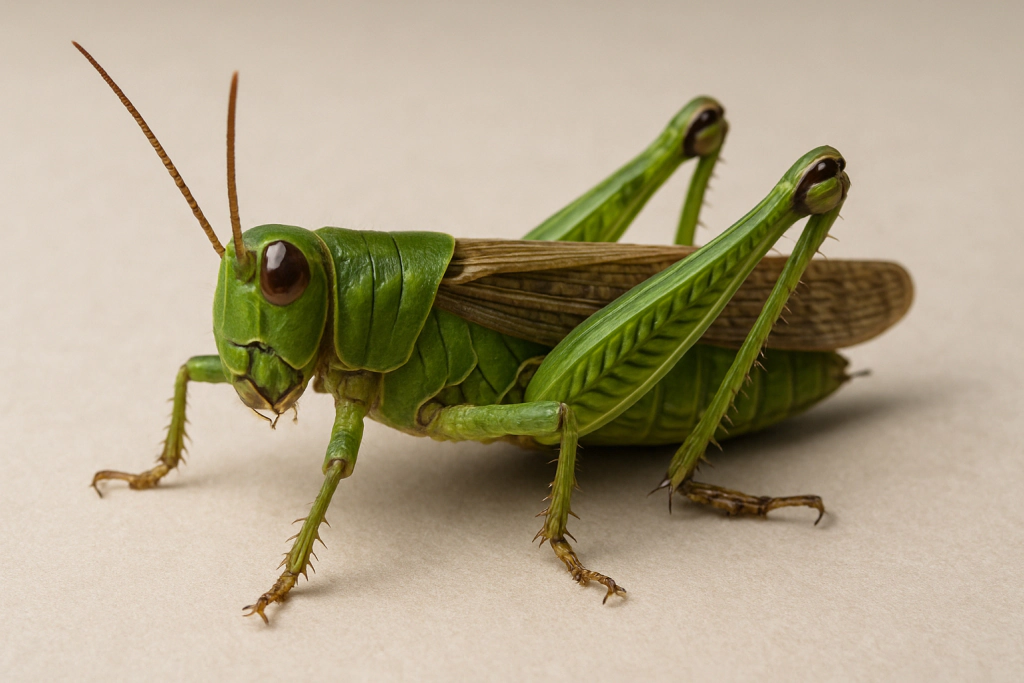
Grasshoppers: When Your Yard Becomes Their Buffet
They may look harmless, but once they start chewing, your landscape is on the menu.
Grasshoppers might seem like innocent sun-loving insects, but in larger numbers, they can wreak havoc on commercial landscapes, green spaces, and perimeter vegetation. At our pest management company, we’ve seen how quickly these pests can escalate from a minor nuisance to a costly problem for property managers and facility owners.
If the conditions are right, they’ll move from casual visitors to full-scale leaf-stripping invaders, leaving damage that’s hard to undo. That’s why early intervention from a trusted pest management company is key to protecting your property, your curb appeal, and your budget.
Here’s what you need to know about this common desert pest—and why proactive prevention is essential for maintaining a clean, professional exterior.
What They Look Like
- Medium to large, with powerful back legs and long antennae
- Usually green, brown, or tan—camouflage experts in dry landscapes
- Jump and fly short distances, often startled out of grass or gravel
Why Grasshoppers Are a Problem
One or two might not seem like a big deal—but they never travel alone for long:
- Feed on lawns, shrubs, garden plants, and decorative landscaping
- Can strip leaves down to stems during peak activity
- Their waste can stain surfaces and attract ants or flies
- Large populations can draw in rodents, lizards, and birds
Where You’ll Find Them
- Sunny open areas like yards, parks, garden beds, and decorative rock
- Common in fields, desert lots, and underwatered or stressed vegetation
- Often hide along block walls, fence lines, or the edges of raised planters
Inspector A Grade’s Tip:
“Grasshoppers don’t just nibble—they feast. If they’re munching on your plants, they’re also sending a dinner invite to everything that eats them. Control the conditions early, and you’ll avoid a chain reaction.”
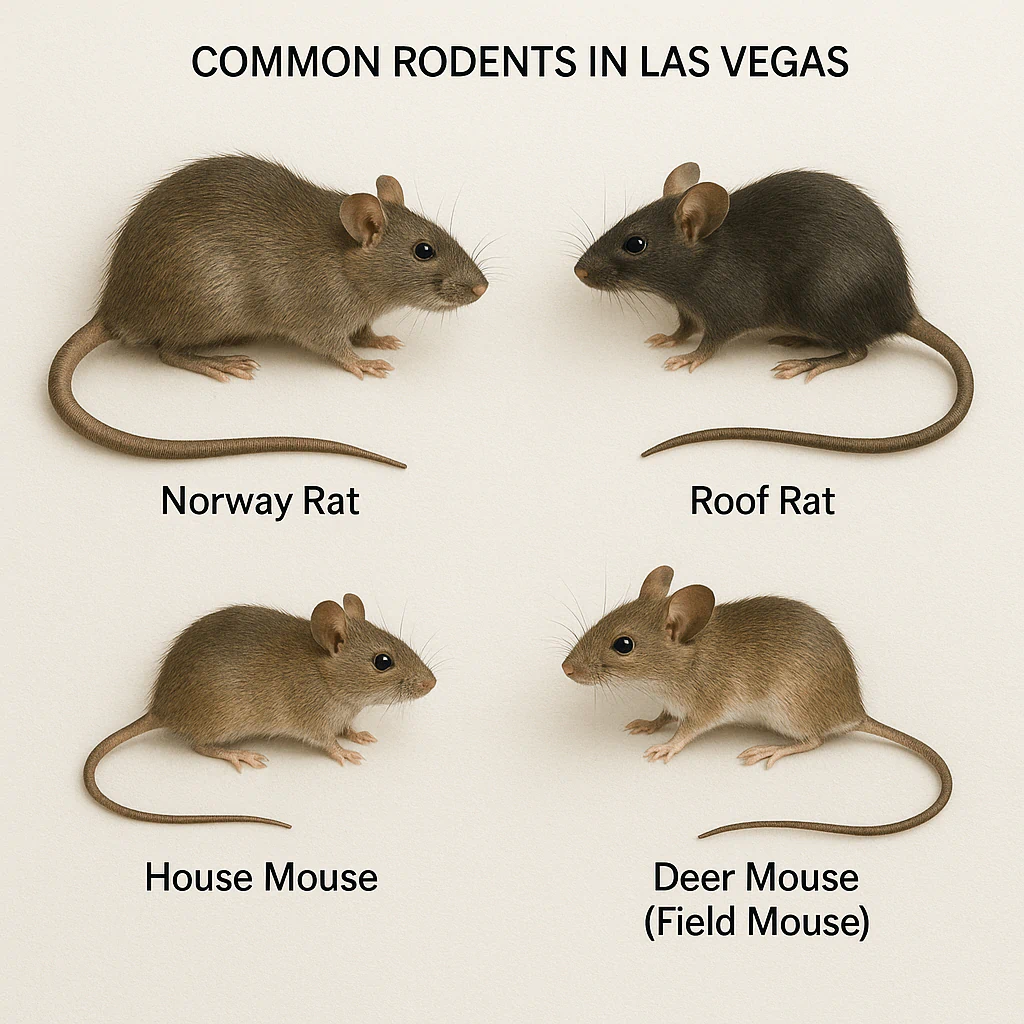
Rodents Don’t Visit—They Move In
Whether it’s in the attic, behind the fridge, or inside a storage facility, once rodents find a way in, they bring disease, damage, and plenty of company.
Rodents aren’t just creepy—they’re a serious threat to health, safety, and property, especially in commercial environments. They chew through wiring, contaminate inventory and food supplies, and leave behind droppings that compromise sanitation standards and public health regulations.
Partnering with a professional pest management company ensures rodent problems are handled quickly and strategically. The best defense? Identifying which rodent is running the show so your pest management company can design a targeted, compliance-ready control plan that protects your facility and reputation.
Deer Mouse
What They Look Like: Small (3–4”), with white bellies and brown or gray tops. Large eyes and ears. Tail is bicolored.
Why You Should Care:
- Known carrier of hantavirus, which spreads through droppings and urine.
- Typically found in rural or undeveloped areas, sheds, garages, or vacant buildings.
- May nest in stored materials, furniture, or insulation.
House Mouse
What They Look Like: Small and dusty gray with lighter bellies. Tail is the same length as the body.
Why You Should Care:
- The most common indoor rodent in homes and businesses.
- Chews through packaging, wiring, and insulation.
- Leaves behind droppings, urine trails, and grease marks on baseboards.
- Rapid reproduction—just a couple mice can turn into a full infestation quickly.
Norway Rat (a.k.a. Sewer Rat)
What They Look Like: Large (up to 16” with tail), brown or gray, with blunt noses and short ears.
Why You Should Care:
- Heavy-bodied and excellent diggers—often burrow near foundations, trash areas, or landscaping.
- Spread diseases like leptospirosis and salmonella.
- Can chew through plastic, wood, and even soft metal.
- Common in lower levels, basements, and sewer-adjacent areas.
Roof Rat
What They Look Like: Sleek and slender with large ears and long tails. Usually black or dark brown.
Why You Should Care:
- Expert climbers—nest in attics, trees, wall voids, and even palm fronds.
- Cause serious damage to electrical systems and insulation.
- Drop urine and droppings in high areas that are easy to overlook.
- Spread disease and are especially active in warm-weather zones like Southern Nevada.
Inspector A Grade’s Tip:
“Rodents don’t just show up—they find a way in. Cracks, vents, rooflines, even pipes. That’s why I check high and low, inside and out, to stop them in their tracks. Let’s seal it up and Make the Grade.”
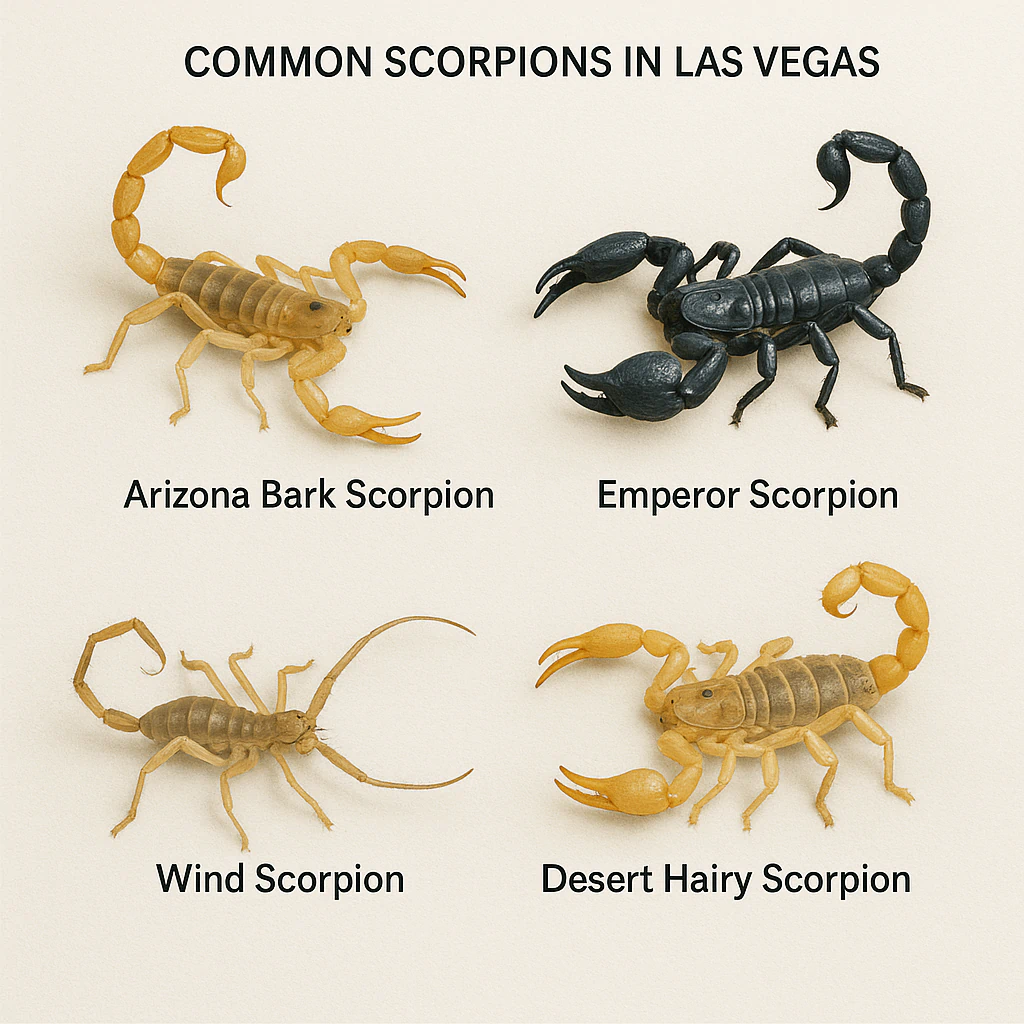
Scorpions: None of Them Belong Indoors
From venomous to just unsettling—if a scorpion’s inside your property, it’s time to seal, treat, and inspect.
Scorpions are native to Southern Nevada, and while most prefer to stay outside, they’ll absolutely sneak indoors when conditions are right, especially in commercial spaces like warehouses, retail shops, and hospitality venues. Once they’re in, it’s a serious liability, whether they’re venomous or not.
That’s where a professional pest management company comes in. With expert sealing, routine inspections, and targeted scorpion control, your business can stay compliant, safe, and pest-free. Let’s go over the most common types found in our region, how to spot them, and why partnering with a pest management company is key to keeping them out, for good.
Arizona Bark Scorpion
What They Look Like: Slender and light tan, about 2–3 inches long. Easily climbs walls and ceilings.
Why You Should Care:
- Most venomous scorpion in North America.
- Sting can cause intense pain, numbness, breathing issues, and in rare cases, medical emergencies—especially for kids and pets.
- Excellent climbers and sneaky hiders; often found in shoes, sinks, and laundry.
- Active at night and highly adaptable to urban environments.
Desert Hairy Scorpion
What They Look Like: The largest scorpion in North America—up to 6 inches long. Yellow-tan body with dark top and hairy legs.
Why You Should Care:
- Their sting is painful but not considered dangerous to most people.
- Prefer outdoor habitats—burrows, desert landscaping, and under rocks.
- Can wander indoors during extreme heat or drought.
- More intimidating than harmful, but still not something you want as a roommate.
Emperor Scorpion (rare in the wild here)
What They Look Like: Large (up to 8”), glossy black, and bulky with thick pincers.
Why You Should Care:
- Not native to Nevada—usually seen as exotic pets, but escapes or illegal dumping can occur.
- Sting is mild, but their size is enough to cause concern.
- If spotted in the wild here, it’s unusual and should be reported—could indicate a pet release or exotic infestation issue.
Wind Scorpion (a.k.a. Solifuge or Sun Spider)
What They Look Like: Tan to reddish, no stinger, large jaws, fast-moving with long legs—looks like a mix between a spider and scorpion.
Why You Should Care:
- Technically not a true scorpion (no stinger), but included here because they’re commonly mistaken for one.
- Can bite, but it’s not venomous—just painful.
- Aggressive appearance but mostly harmless—creepy and fast, but not a threat to humans or pets.
- Found in garages, crawlspaces, and outdoor storage.
Inspector A Grade’s Tip:
“Most scorpions want to be left alone—but they’re great at slipping in where they’re not invited. I look for the cracks, gaps, and hiding spots that make them feel at home, so we can show them the door—safely.”
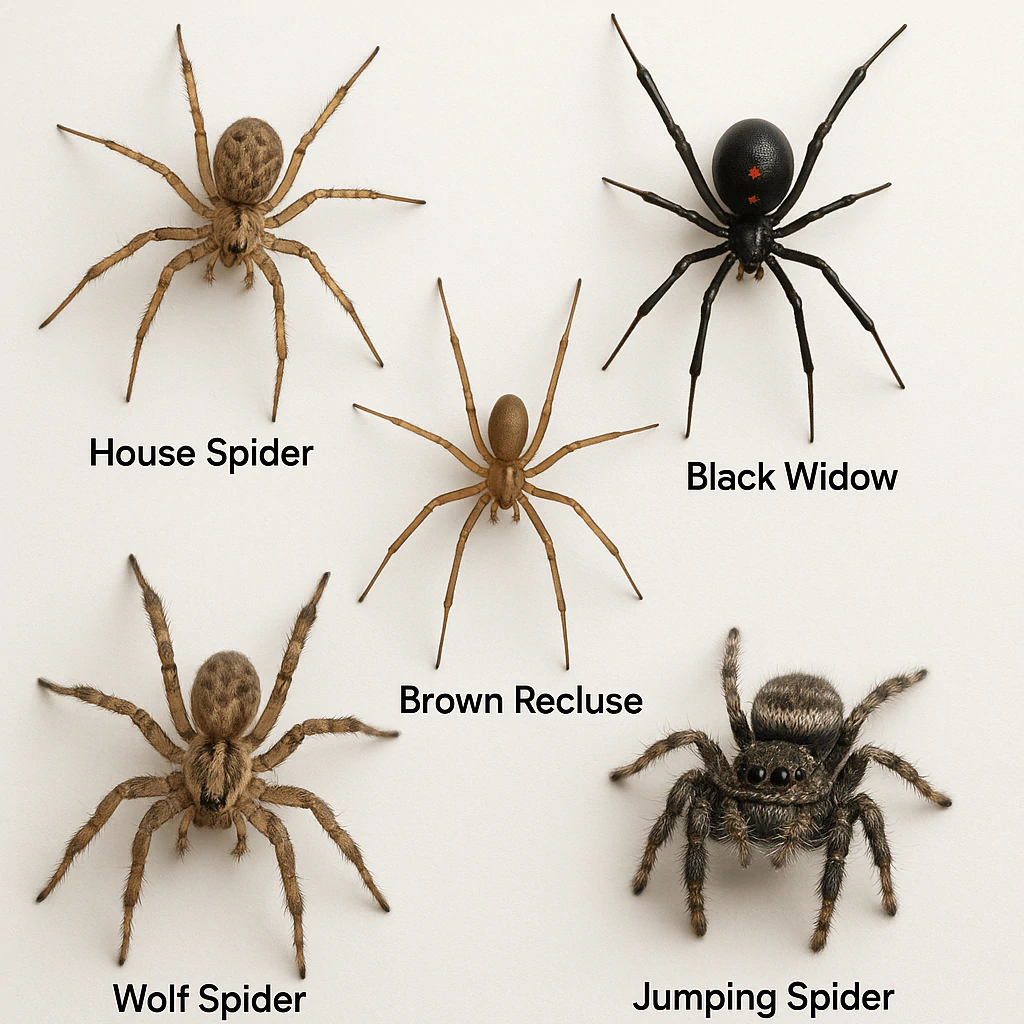
Spiders: Not All Are Welcome, and Some Are Worse Than Others
Some are harmless helpers. Others? Not so much. Know the difference before they get too comfortable, especially in your commercial property.
The truth is, not all spiders are dangerous, and many are helpful in controlling other pests. But when they start showing up inside your business—whether it’s an office, warehouse, or retail space—it becomes a liability. Especially if venomous species like the black widow or recluse are involved, you can’t afford to guess.
That’s where a trusted pest management company comes in. Identification is key to effective treatment, and a professional inspection ensures you’re addressing the right problem with the right solution. Let’s break down the most common spiders you’ll encounter in Las Vegas and Henderson—what they look like, where they hide, and why working with a pest management company is your safest move.
Black Widow
What They Look Like: Glossy black body with a distinct red hourglass on the underside of the abdomen. Females are larger (~1.5 inches with legs).
Why You Should Care:
- Venomous—a bite can cause severe pain, muscle cramps, nausea, and more.
- They like dark, undisturbed areas like garages, sheds, crawlspaces, and patio furniture.
- Fast movers when threatened but typically shy—they bite when cornered or surprised.
Brown Recluse (rare but not impossible)
What They Look Like: Light brown to tan, about the size of a quarter. Look for a violin-shaped marking on the back.
Why You Should Care:
- Bite can cause necrosis (skin tissue damage), though not all bites are severe.
- Prefers undisturbed indoor areas—boxes, closets, shoes, or attic corners.
- While uncommon in Las Vegas, occasional reports suggest they can hitchhike in shipments or furniture.
Common House Spider
What They Look Like: Small (1/4”–½”), brown or yellowish with mottled coloring. Builds messy cobwebs in corners or behind furniture.
Why You Should Care:
- Not harmful to people or pets.
- More of a nuisance pest—but a sign that other bugs are nearby (they go where the food is).
- Often mistaken for something scarier, but usually harmless.
Wolf Spider
What They Look Like: Large, hairy, fast-moving. Brown to gray with stripes or patterns. Eyes shine in light at night.
Why You Should Care:
- Not venomous, but their size makes them intimidating.
- Hunt instead of web—you’ll find them roaming floors, garages, or outdoor areas at night.
- Can bite if handled, but symptoms are usually mild.
Inspector A Grade’s Tip:
“Most spiders want nothing to do with you—but that doesn’t mean you want them hanging around. I help spot the danger zones, clean up attractants, and keep the creepy crawlers out of your space—safely.”
Tarantulas: Big, Hairy, and Chasing the Bug Buffet
They’re not hunting you—but if they’re showing up, it means something else is drawing them in.
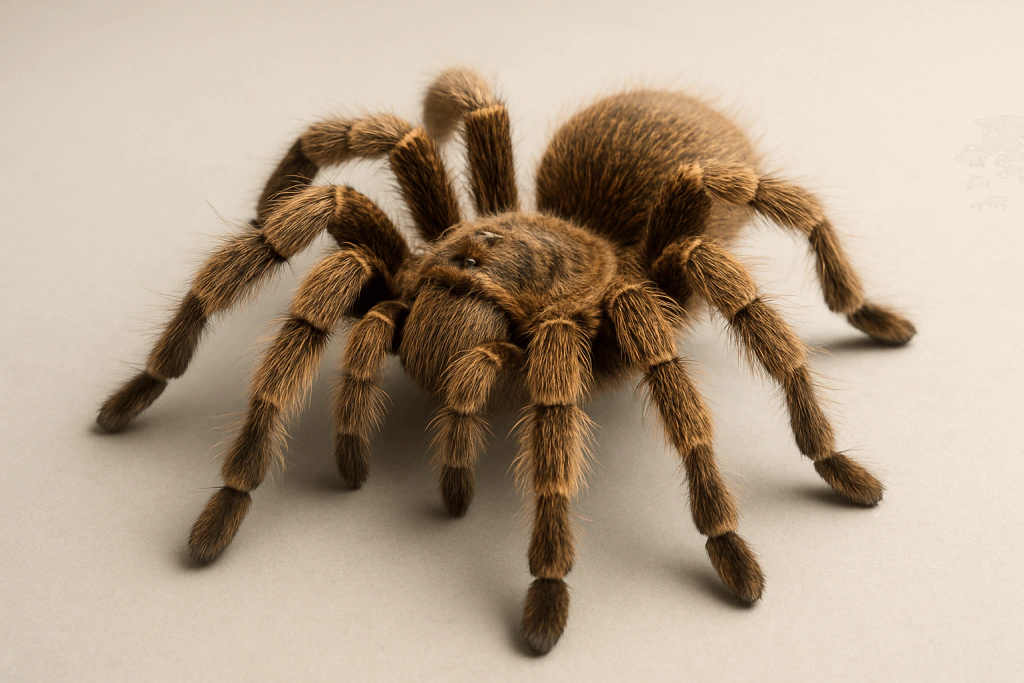
Tarantulas: Big, Hairy, and Chasing the Bug Buffet
They’re not hunting you—but if they’re showing up, it means something else is drawing them in.
Believe it or not, these gentle giants get a bad rap. While their size might trigger a shiver or two, tarantulas are not aggressive and rarely pose any real threat to humans or pets. That said, they can still be unwelcome guests—especially when they show up near commercial properties, patios, or high-traffic areas.
For business owners and property managers, even harmless pests can cause panic among staff, tenants, or customers. That’s where a professional pest management company makes all the difference. Spotting a tarantula might indicate underlying issues—like shelter opportunities or other pest activity—that require strategic inspection and prevention.
Here’s what you need to know about these desert dwellers—and why partnering with a pest management company can help you stay ahead of potential intrusions before they become a disruption.
What They Look Like
- Large and hairy, usually 3–5 inches across with brown or tan coloring
- Slow-moving and non-aggressive by nature
- Males wander most during late summer and early fall, especially at night
Are Tarantulas Dangerous?
Not really. Their bite feels similar to a bee sting and they rarely bite unless provoked.
Most of the time, they’re just passing through. However:
- They can trigger allergic reactions with their hairs if handled
- Pets that paw or chew at them may get irritated mouths or noses
- Their presence often means your property is attractive to insects
Where You’ll Find Them
- Along block walls, desert landscaping, sheds, or garages
- Hidden in burrows, woodpiles, or debris
- Most active during cooler evenings in late summer or early fall
Inspector A Grade’s Tip:
“Tarantulas aren’t hunting you—they’re just following dinner. If you’re seeing them around your property, chances are you’ve got a buffet of insects drawing them in. Control the bugs, and the big guys follow suit.”
What’s in the Treatment?
Hey there—Inspector A Grade here. Let’s talk treatments.
When I show up, I’m not grabbing the biggest sprayer I can find and going full blast. That’s not how a professional pest management company operates—especially in commercial environments where safety, compliance, and precision matter most.
At A Grade Nevada IPM, everything we apply is low-toxicity, targeted, and chosen with care—for your staff, your customers, your space, and the ecosystem we all share. Whether you’re managing a restaurant, warehouse, office building, or multi-unit facility, smart pest management starts with understanding your environment.
As a responsible pest management company, we follow the science, not the shortcuts. That means using eco-conscious products only when (and where) they’re truly needed—and explaining exactly why—so you’re always in the know and in control.
Tools of the Trade (That I Actually Use):
- Botanical Insecticides – Made from essential oils like rosemary, thyme, and clove. They break down fast but hit pests hard.
- Baits – Attracts pests and takes the solution straight to the source. Minimal risk, maximum control.
- Dusts – Used in dry spots like wall voids and under sinks. Boric acid or silica dusts act like hidden traps.
- IGRs (Insect Growth Regulators) – Disrupt the life cycle to prevent bugs from maturing or reproducing.
- Monitors & Glue Boards – Non-toxic tools that help track pest activity and guide treatment decisions.
What I Don’t Do:
- No blanket spraying just for show
- No long re-entry products unless absolutely needed
- No treatments near pollinator pathways or blooming plants
Real pest control is strategic—not sloppy.
Pet & Pollinator Safety Comes First
I always let you know if a space needs to be cleared and keep pets and beneficial bugs in mind at every step. You’ll never see me spraying near food bowls, beehives, or flower beds.
Scorpion Hunting: UV, Not Guesswork
Scorpions are sneaky. You can’t just spray and hope. They’re nocturnal, which means they hide during the day and hunt at night. So I do the same.
With a UV flashlight, I search at night. Under blacklight, scorpions glow green-blue, making it easier to spot their paths and nesting spots.
Why I Hunt First, Treat Second:
- Scorpions are most active after sunset
- UV shows what daytime inspections miss
- I find entry points, wall gaps, planters, and fence lines
- I treat based on real activity—not guesses
Inspector A Grade’s Tip:
“If you don’t know where they’re coming from, how can you stop them? That’s why I inspect before I treat—so every product goes to work where it counts.”
The Eco-System Effect
Hey again—it’s your favorite checklist with a conscience, Inspector A Grade.
Here’s the thing: not every bug is a bad bug. When you see something crawling, it’s easy to panic. But eco-friendly pest control means knowing what to keep—and what to treat.
The goal? Target the problem while preserving the balance. Especially here in Southern Nevada, where every critter plays a role.
Helpful Bugs You Actually Want Around
- Ladybugs – Feed on aphids and scale insects
- Green Lacewings – Tiny pest-hunting machines
- Parasitic Wasps – Naturally control flies and caterpillars
- Spiders (Non-Venomous) – Help control flies and mosquitos
Predators We Protect
- Birds of Prey – Natural rodent control
- Bats – Eat hundreds of mosquitoes a night
- Lizards & Frogs – Ground-level insect control
Why Over-Spraying Is a Problem
- Kills pollinators and beneficial insects
- Drives pests deeper into walls or nests
- Builds pesticide resistance
More spray doesn’t mean more control—it often means more problems.
Our Approach
- Spot treatments only where needed
- We preserve beneficial insects whenever possible
- I educate you on how to maintain balance
Inspector A Grade’s Tip:
“Good pest control doesn’t bulldoze nature—it works with it. When we respect the ecosystem, we get cleaner results, fewer comebacks, and more harmony. That’s how we Make the Grade.”
Prevention Starts With You
Hi again—it’s Inspector A Grade, and I’ve got some pro tips you can actually use.
Even the best pest control plan works better when we’re all on the same page. These simple changes go a long way in reducing pest pressure naturally—no sprays required.
Top Pest Attractants to Watch For
- Pet food left out overnight
- Overwatered landscaping or leaks
- Dirty trash bins or open dumpsters
- Cracks around doors, pipes, and windows
- Stacks of cardboard in storage areas
Seasonal Prevention Tips
- Spring: Seal cracks, clear debris before ant season
- Summer: Monitor wasps, manage compost
- Fall: Install door sweeps, inspect attic vents
- Winter: Check crawlspaces and insulation
Daily Habits That Help
For Businesses:
- Assign a pest-prevention checklist to staff
- Avoid stacking items against walls
- Schedule routine deep cleans
- Clean floor drains and bar sinks regularly
For Homes:
- Store food in airtight containers
- Don’t leave dishes or standing water overnight
- Vacuum baseboards and behind furniture
Pest Control for Pet Owners
Hey there—Inspector A Grade reporting for pet-friendly duty. 🐾
As someone who takes safety seriously (and has a soft spot for our four-legged, feathered, and scaled friends), I want you to know that every treatment we use at our pest management company follows pet-safe practices from start to finish. In commercial settings—whether it’s a veterinary clinic, boarding facility, pet-friendly business, or even a residential property with animals—safety is non-negotiable.
Our Integrated Pest Management (IPM) approach is designed to keep pests out without putting your animals at risk. As a trusted pest management company, we carefully select and apply treatments that are both effective and considerate of your environment.
Whether you’ve got dogs, cats, parrots, geckos, or the whole backyard menagerie, we’ll build a plan that works around them—not against them—while keeping your business fully protected and compliant.
Pre-Service Checklist for Pet-Safe Pest Control
Before I arrive, here are a few simple steps you can take to help keep your pets safe and stress-free:
- Let your technician know what pets are on the property—including fish tanks, birds, reptiles, or exotic animals
- Pick up food bowls, toys, and bedding near treatment zones
- Temporarily move pets to a separate area if we’re treating indoors or in active pet play spaces
After the Treatment
Once we’re done, it’s just as important to let the treatment settle in safely. Here’s how to help your pets ease back in:
- Wait for surfaces to fully dry before allowing pets back into treated areas
- If cleaning is needed, stick to plain water only—no harsh cleaners
- Keep an eye out—some pets (especially curious pups and cats) like to sniff bait stations or glue traps, so monitor their behavior and let us know if you have concerns
Common Pest Risks for Pets
Even though our treatments are pet-conscious, pests themselves still pose real threats to animals:
- Fleas and ticks from wildlife or contact with other pets
- Fire ants or wasp stings in the yard or during walks
- Rodent droppings, which can carry disease
- Ingesting bait from unsecured stations (ours are always locked down tight—but not every provider does that)
Got More Than a Couple Pets? No Problem.
For homes and properties with multiple animals or livestock, I offer:
- Livestock-safe perimeter treatments that protect barns, coops, and kennels
- Fly and mosquito control plans tailored for warm-weather months
- Educational materials for rescue groups, foster homes, and multi-animal facilities
Inspector A Grade’s Tip:
“Your pets are family. That’s why I build pest control plans that keep them safe while keeping your home protected. With the right prep and a smart IPM plan, everyone—two legs or four—can Make the Grade.”
Get in Touch With Our Pest Control Pros
-
Call Us:
-
Location:
Las Vegas, NV