


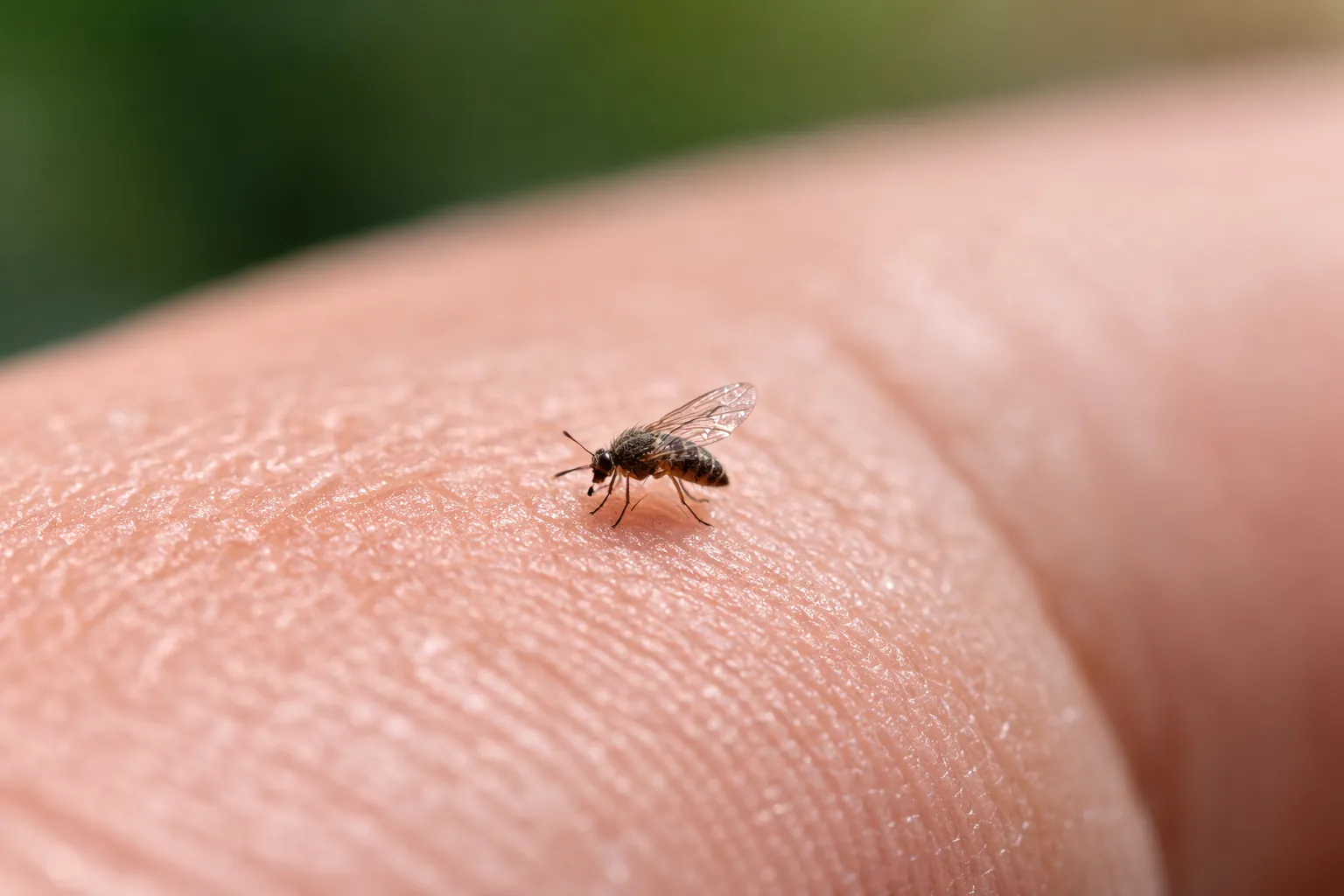
Know Your Pests - No-See-Ums

No-See-Um Life & Reproduction: Why These Tiny Biting Pests Multiply So Fast
No-see-ums may be tiny, but they can become a big problem fast. Also known as biting midges, these pests are notorious for painful bites, fast breeding cycles, and their ability to thrive in damp outdoor environments. Because of their small size, they often go unnoticed until people start dealing with itchy welts, outdoor discomfort, or repeated activity around patios, landscaped spaces, animal areas, and moisture-prone property edges. Extension sources note that no-see-ums are true flies in the family Ceratopogonidae, and many biting species are in the genus Culicoides. Adults are often extremely small, around 1/8 inch or less, which helps explain why they are so easy to miss.
Understanding the no-see-um life cycle is one of the best ways to reduce pressure around homes, commercial properties, outdoor hospitality spaces, and large residential landscapes. Like mosquitoes, biting midges develop through four life stages: egg, larva, pupa, and adult. Their breeding areas are usually tied to moisture, wet soil, organic buildup, muddy edges, marshy spots, overwatered landscaping, and other damp environments where immature stages can develop.
Understanding the No-See-Um Life Cycle
Eggs Are Laid in Moist Breeding Areas
Female no-see-ums lay eggs in damp or wet environments where larvae will have the moisture they need to survive. Depending on species, eggs may be placed in wet soil, muddy ground, marsh edges, or other moisture-rich organic material rather than only open standing water. That means properties with over-irrigation, drainage issues, damp mulch, animal areas, or consistently wet landscape zones can support breeding activity without obvious pools of water.
Key takeaway: No-see-um breeding is often tied to hidden moisture, not just visible water.
Larvae Develop in Wet Organic Material
After hatching, larvae develop in damp environments rich in organic matter. These immature stages are easy to overlook because they are not flying yet and are concealed in the substrate. This is one reason infestations can build quietly in outdoor areas before adult biting activity becomes obvious. Sources also note that control of immature stages is often impractical once breeding is widespread across natural or semi-natural habitats.
Key takeaway: The source of activity is often below the surface in wet soil, organic debris, or muddy breeding zones.
Pupae Transition Quickly Into Flying Adults
Once larval development is complete, no-see-ums enter the pupal stage and then emerge as flying adults. Their full life cycle can be completed in as little as two to six weeks, depending on environmental conditions and species. Warm weather and moisture help speed development, which is why biting midge pressure can build quickly during favorable conditions.
Key takeaway: Warm, damp conditions can turn a small problem into a recurring outdoor pest issue fast.
Female Adults Bite for Blood Meals
Only the female biting midges take blood meals. Males feed on plant sugars, while females bite animals or people to support egg production. Extension guidance notes that females can take multiple blood meals and lay several batches of eggs, which is a major reason activity can continue over time when breeding sites remain active. Biting activity is often strongest around dawn and dusk, though some species may also bite during the day.
Key takeaway: If females keep finding hosts and breeding habitat, the cycle can continue again and again.
Why No-See-Ums Become a Recurring Outdoor Pest Problem
No-see-ums are difficult because they do not need the same obvious breeding conditions people usually associate with mosquitoes. They can take advantage of wet soil pockets, irrigation runoff, damp landscape edges, muddy animal zones, and organic buildup, especially in properties with regular watering or poorly balanced drainage. Their small size also allows them to slip through damaged screens or tiny openings more easily than larger pests. NC State notes that even when windows are screened, small tears and gaps may still allow them inside.
This makes them especially frustrating for:
- outdoor patios and dining areas
- dog yards and boarding properties
- landscaped residential communities
- equestrian and animal properties
- commercial properties with irrigation and shaded damp zones
Why Their Bites Feel Worse Than Their Size Suggests
Because no-see-ums are so small, many people expect them to be minor nuisances. In reality, their bites can be painful, irritating, and long-lasting, often leaving clusters of itchy welts that linger for days or even weeks in sensitive individuals. UF/IFAS notes that bites are often small, numerous, and painful.
That is why a no-see-um issue can quickly become more than a comfort problem. For properties that rely on usable outdoor space, repeated biting pressure can affect:
- guest comfort
- employee morale
- pet and animal environments
- outdoor recreation
- overall property experience
Why DIY Control Often Falls Short
One of the biggest challenges with no-see-ums is that adult treatments alone are usually temporary. NC State notes that ULV sprays, fogs, mists, and other adulticide-type applications often provide only short-term relief because new adults can quickly move back into the area after treatment dissipates.
That means long-term reduction usually depends on identifying and correcting the environmental factors that support them, including:
- excess moisture
- irrigation oversaturation
- drainage issues
- wet debris accumulation
- breeding habitat near people, pets, or gathering spaces
Why Integrated Pest Management Works Best for No-See-Ums
Because no-see-ums are so closely tied to moisture and habitat conditions, Integrated Pest Management (IPM) is the most effective long-term strategy. Instead of relying only on repeated spray applications, IPM focuses on:
- identifying likely breeding conditions
- reducing excess moisture
- correcting drainage and irrigation issues
- improving exclusion around structures
- targeting adult activity where pressure is highest
- monitoring recurring hotspots over time
This matters in Nevada because no-see-um activity can build around desert landscaping with irrigation, shaded dog runs, damp soil near drip lines, decorative water features, animal areas, and other micro-environments where moisture lingers longer than expected.
The Bottom Line
No-see-ums may be tiny, but their reproductive cycle and biting behavior make them a serious nuisance pest in the right conditions. When moisture, breeding habitat, and blood hosts are all available, these pests can multiply quickly and keep outdoor spaces uncomfortable. Understanding their life cycle helps explain why prevention, moisture management, and IPM-based control are so important for lasting results.
Get in Touch With Our Pest Control Pros
-
Call Us:
-
Location:
Las Vegas, NV