




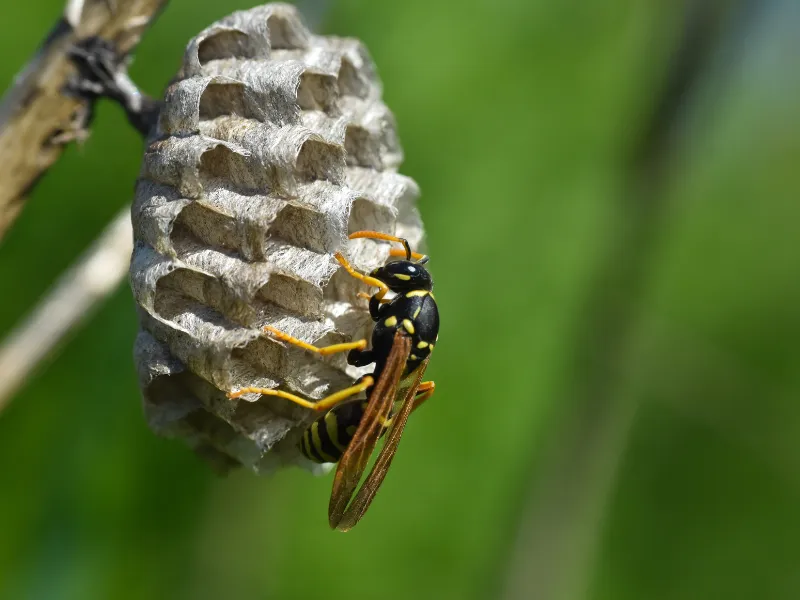
Wasps: Life & Reproduction — Understanding the Threat and How to Stop It
When warm weather arrives, so do wasps. These buzzing insects are often misunderstood, but their life and reproduction cycles reveal why infestations can grow so quickly—and why professional pest control is essential for long-term protection.
In this blog, we’ll explore the wasp life cycle, how they reproduce, why colonies expand so rapidly, and how Integrated Pest Management (IPM) from A Grade Nevada offers a safe, effective way to stop them before they multiply.
The Life of a Wasp: How It All Begins
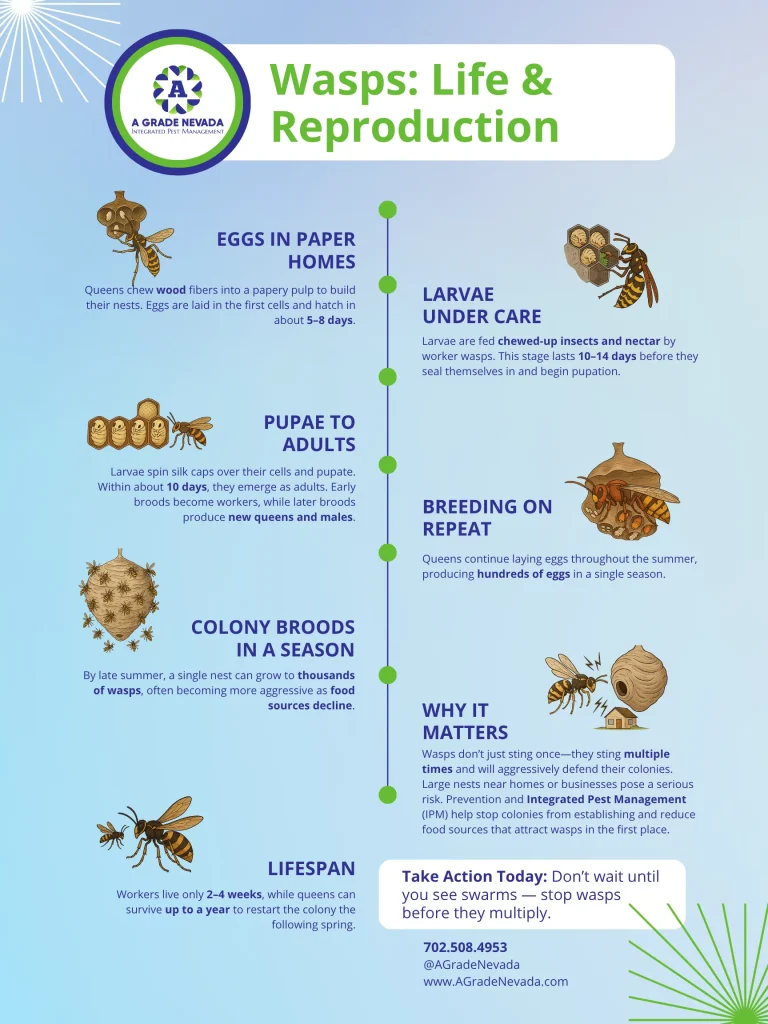
Eggs in Paper Homes
Every wasp colony starts with a queen. In the spring, fertilized queens emerge from hibernation and begin searching for nesting sites—often in eaves, attics, trees, or sheds. Using chewed wood fibers, the queen creates a papery pulp to construct the first cells of her nest.
She lays eggs in each cell, which hatch in about 5–8 days, beginning the foundation of a new colony.
Larvae Under Care
Once the eggs hatch, worker wasps feed the larvae a diet of chewed-up insects and nectar. This stage lasts around 10–14 days, during which the larvae grow rapidly before sealing themselves into their cells to begin pupation.
This cooperative care system is part of what makes wasps so resilient—each generation helps the next survive and thrive.
Pupae to Adults
Within about 10 days, larvae transform into adult wasps. The first brood of adults becomes the queen’s workers, taking over foraging, nest expansion, and caring for future offspring.
As the season progresses, later broods will include new queens and males, ensuring the colony’s survival into the following year.
Breeding on Repeat
During the summer, the queen continues to lay hundreds of eggs. With favorable conditions—ample food sources and warm temperatures—colony numbers can soar.
Unlike honeybees, which die after stinging, wasps can sting repeatedly, making large colonies particularly dangerous when they feel threatened.
By late summer, a single nest can contain thousands of wasps, many of which become more aggressive as food sources dwindle.
Colony Broods and Seasonal Behavior
As the season changes, the colony’s focus shifts from expansion to survival. In late summer and early fall, new queens mate and seek shelter for the winter, while worker wasps and males die off as temperatures drop.
In the following spring, those overwintered queens start the process anew—building fresh nests, laying eggs, and restarting the cycle.
Because of this annual reproductive rhythm, even a small spring nest can turn into a massive late-summer infestation if not addressed early.
Wasp Lifespan and Survival Strategies
- Workers: Live 2–4 weeks, focusing on foraging and defense.
- Queens: Can survive up to a year, hibernating through winter to restart the colony next spring.
Wasps are highly adaptable, often nesting in human structures where they find warmth and protection. This behavior makes prevention and early detection critical.
Why Wasp Reproduction Matters
Wasps aren’t just a minor annoyance. Their ability to build large colonies and defend them aggressively makes them a real hazard. Unlike some insects that die after stinging, wasps can sting multiple times, causing severe pain, allergic reactions, and even medical emergencies in sensitive individuals.
A single colony can produce hundreds to thousands of wasps in a season, each capable of defending the nest or invading nearby areas in search of food.
Integrated Pest Management (IPM): The Best Defense Against Wasps
At A Grade Nevada, we don’t just spray and walk away. Our Integrated Pest Management (IPM) approach targets wasps at the source, preventing future infestations and minimizing harm to your family and the environment.
How IPM Works for Wasp Control:
- Inspection & Identification: We identify the species and locate nests, whether hidden under eaves or deep within walls.
- Targeted Treatment: Eco-conscious treatments remove active nests without harming beneficial pollinators.
- Prevention & Exclusion: We seal potential nesting areas and reduce food sources that attract wasps.
- Ongoing Monitoring: Regular inspections ensure wasps don’t rebuild in the same locations.
By combining these steps, A Grade Nevada’s IPM strategy stops wasps before they swarm—offering long-term peace of mind and safety.
Common Wasp Nesting Sites Around Homes
Wasps often build nests in overlooked places around properties. Keep an eye on:
- Roof eaves and overhangs
- Porch ceilings and attics
- Garden sheds and garages
- Hollow trees or wood piles
- Beneath decks or patios
Early detection and removal are crucial to avoid large, aggressive colonies later in the season.
Preventing Wasp Infestations: Homeowner Tips
You can reduce the likelihood of wasps taking over your space with a few proactive steps:
- Seal entry points: Patch cracks, holes, and gaps around your home’s exterior.
- Remove food sources: Keep outdoor trash sealed and clean up fallen fruit or sweet spills.
- Avoid open drinks outside: Wasps are drawn to sugary beverages.
- Check regularly: Inspect eaves, decks, and sheds during spring for early nest activity.
- Call a professional: DIY nest removal can be dangerous—especially for large or hidden nests.
Why Choose A Grade Nevada for Wasp Control
Wasps may seem like a summertime nuisance, but their fast reproduction cycle and aggressive nature make them a serious risk to homeowners. At A Grade Nevada, our experienced pest control team uses IPM strategies to safely remove wasps and prevent future colonies from forming.
👉 Learn more about our pest control services and how we can protect your property year-round.
📞 Call us today at (702) 508-4953 or request a quote to schedule your mosquito inspection.
Conclusion
Wasps reproduce quickly and defend their nests fiercely, making them one of the most challenging pests to deal with. Understanding their life cycle helps explain why infestations grow so fast—and why professional IPM pest control is the key to lasting protection.
Don’t wait until you see swarms near your home or business. Take action now to stop wasps before they multiply.